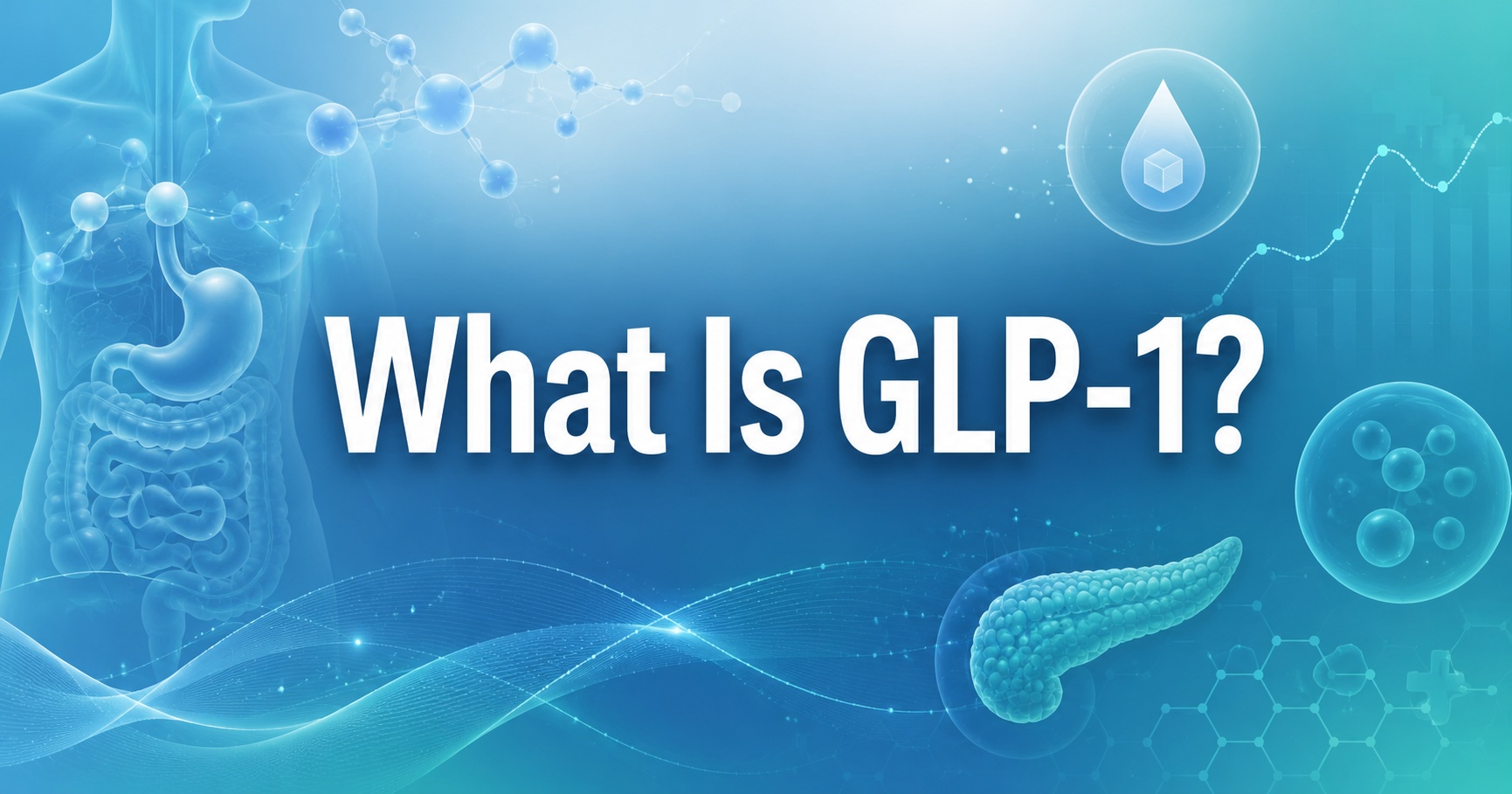
GLP-1 is a natural hormone that helps regulate blood sugar, appetite, and digestion.
Its full name is glucagon-like peptide-1. The body releases it after you eat, mainly from cells in the small intestine and colon.
GLP-1 has become widely known because several medications copy or enhance its effects. These medicines are used to treat type 2 diabetes. Some are also approved for long-term weight management.
Understanding GLP-1 can make it easier to see why these treatments affect hunger, blood sugar, and body weight.
What Does GLP-1 Do in the Body?
GLP-1 is part of the body’s normal response to food.
After a meal, nutrients enter the digestive system. This triggers the release of GLP-1 into the bloodstream.
The hormone then sends signals to several organs.
It tells the pancreas to release insulin when blood sugar is elevated. Insulin helps move glucose from the blood into cells, where it can be used for energy.
GLP-1 also reduces the release of glucagon. Glucagon is a hormone that tells the liver to release stored glucose. Lower glucagon activity can help prevent blood sugar from rising too high after meals.
The effects of GLP-1 are not limited to blood sugar. It also slows the movement of food from the stomach into the small intestine.
This is called delayed gastric emptying.
Food stays in the stomach longer, which may increase fullness after eating. GLP-1 also acts on areas of the brain involved in appetite and food intake.
Together, these effects can reduce hunger and make smaller portions feel more satisfying.
Why Is Natural GLP-1 So Short-Lived?
The body breaks down natural GLP-1 very quickly.
An enzyme called dipeptidyl peptidase-4, often shortened to DPP-4, deactivates most natural GLP-1 within minutes.
This short lifespan is useful for normal meal-to-meal regulation. However, it makes natural GLP-1 difficult to use directly as a medication.
Scientists developed drugs that activate the same receptor but remain active for much longer. These medicines are called GLP-1 receptor agonists.
What Are GLP-1 Receptor Agonists?
GLP-1 receptor agonists are medications that imitate the effects of natural GLP-1.
They attach to GLP-1 receptors in the pancreas, brain, stomach, and other tissues. This can improve blood sugar control and reduce appetite.
Common GLP-1 receptor agonists include:
- Semaglutide
- Liraglutide
- Dulaglutide
- Exenatide
- Lixisenatide
Some medications work on more than one hormone pathway.
Tirzepatide, for example, activates both GLP-1 and GIP receptors. GIP stands for glucose-dependent insulinotropic polypeptide. It is another hormone involved in blood sugar regulation and energy balance.
Although these medicines are often discussed together, they are not identical. Their dosing schedules, approved uses, effectiveness, and side effects can differ.
What Are GLP-1 Medications Used For?
GLP-1 medicines were first developed to help manage type 2 diabetes.
They can lower blood sugar by increasing insulin release when glucose levels are high. They also reduce glucagon and slow digestion.
Certain GLP-1 medications are now approved for chronic weight management in eligible adults and, in some cases, adolescents.
The exact approval depends on the drug, dose, age group, body mass index, and presence of weight-related health conditions.
A medication sold for diabetes may contain the same active ingredient as a weight management drug but use a different dose or brand name. The products are not automatically interchangeable.
A clinician should determine which option is appropriate.
How Can GLP-1 Help With Weight Loss?
GLP-1 medications can support weight loss by changing appetite and food intake.
Many people feel less hungry while taking them. Some notice fewer cravings or less interest in highly palatable foods.
Fullness may also arrive sooner during meals.
These changes can make it easier to maintain a calorie deficit. A calorie deficit occurs when the body uses more energy than it receives from food and drink.
The medication does not directly melt fat. Weight loss still happens because energy intake becomes lower than energy expenditure over time.
Results vary widely. Some people lose a substantial amount of weight. Others lose less or stop treatment because of side effects, cost, limited access, or personal preference.
The dose, medication type, treatment duration, eating pattern, activity level, sleep, medical history, and individual biology can all affect results.
How Quickly Do GLP-1 Medications Work?
Appetite changes may appear within days or weeks.
Weight loss is usually more gradual. It often continues over several months as the dose is slowly increased.
Most GLP-1 medications begin at a low dose. This gives the digestive system time to adjust and may reduce side effects.
The dose is then increased according to a set schedule, provided the medication is tolerated.
Blood sugar may improve before major weight changes occur.
Treatment response should be reviewed regularly. A prescriber may adjust the dose, delay an increase, or recommend a different treatment based on progress and side effects.
What Are the Most Common Side Effects?
The most common side effects involve the digestive system.
These may include:
- Nausea
- Vomiting
- Diarrhea
- Constipation
- Abdominal discomfort
- Bloating
- Indigestion
- Reduced appetite
Symptoms are often strongest when treatment begins or after a dose increase.
Eating large meals, eating quickly, or choosing very high-fat foods may worsen nausea for some people. Smaller meals and slower eating may be easier to tolerate.
Vomiting and diarrhea can cause dehydration. Persistent symptoms should be discussed with a healthcare professional.
Are There Serious Risks?
Serious complications are less common, but they can occur.
Possible concerns include pancreatitis, gallbladder problems, severe dehydration, kidney injury, and significant slowing of stomach emptying.
Low blood sugar is not usually common when a GLP-1 medication is taken alone. The risk increases when it is combined with insulin or certain diabetes drugs, such as sulfonylureas.
Some GLP-1 medications carry warnings related to thyroid C-cell tumors observed in animal studies. They may not be suitable for people with a personal or family history of medullary thyroid carcinoma or multiple endocrine neoplasia syndrome type 2.
Safety details vary by medication.
People who are pregnant, planning pregnancy, breastfeeding, or living with certain digestive or endocrine conditions should discuss the risks with a qualified clinician.
Severe abdominal pain, repeated vomiting, signs of dehydration, or symptoms of an allergic reaction require prompt medical attention.
Can Anyone Take a GLP-1 Medication?
No.
These are prescription treatments. They should be used only after an individual medical assessment.
A prescriber may consider current weight, body mass index, blood sugar levels, existing health conditions, medications, pregnancy plans, digestive symptoms, and family medical history.
GLP-1 drugs are not appropriate for every person who wants to lose weight.
They are also not a substitute for medical treatment of an eating disorder. People with current or previous disordered eating should speak with a clinician who understands both weight management and eating disorder care.
Do You Have to Follow a Special Diet?
There is no single GLP-1 diet.
However, food choices can affect comfort, nutrition, and long-term results.
Because appetite may decrease sharply, it can become harder to eat enough protein, fiber, vitamins, minerals, and fluids. Meals should still provide adequate nutrition, even when portions are smaller.
Protein supports muscle maintenance. Fiber can help with bowel regularity. Fluids are important because nausea, vomiting, or diarrhea can increase dehydration risk.
Very large meals may feel uncomfortable. High-fat meals may also worsen nausea in some people.
A balanced eating pattern should match the person’s health needs, culture, preferences, allergies, and ethical choices. Vegan, vegetarian, halal, kosher, and other dietary patterns can all be adapted for GLP-1 treatment.
Can You Exercise While Taking GLP-1?
Most people can remain physically active while taking a GLP-1 medication, provided their clinician has not advised otherwise.
Resistance training is especially useful during weight loss. It helps preserve muscle and strength.
Walking, cycling, swimming, and other forms of cardiovascular activity can support heart health and energy expenditure.
Exercise may feel harder if food intake becomes too low. Dizziness, unusual weakness, or poor recovery may suggest inadequate energy, fluid, or nutrient intake.
People using insulin or medications that can cause low blood sugar may need specific guidance on exercise timing, glucose monitoring, and medication adjustment.
What Happens When You Stop Taking GLP-1?
The appetite-suppressing effects usually decrease after the medication is stopped.
Hunger may increase. Some people regain part or most of the weight they lost.
This does not mean the treatment failed.
Obesity is a chronic condition influenced by genetics, hormones, environment, sleep, medications, stress, and behavior. Long-term treatment may be needed, just as it is for high blood pressure or type 2 diabetes.
Stopping treatment should be discussed with the prescriber. A plan may include continued nutrition support, physical activity, strength training, sleep management, behavioral care, or another medication.
Is GLP-1 the Same as Insulin?
No.
GLP-1 is a hormone that helps control when insulin is released. Insulin is a separate hormone that directly helps glucose enter cells.
GLP-1 receptor agonists do not replace insulin in people who need insulin therapy.
They may sometimes be prescribed alongside insulin for type 2 diabetes. When this happens, doses may need adjustment to reduce the risk of low blood sugar.
Is GLP-1 a Stimulant?
No.
GLP-1 medications do not work like stimulant weight loss drugs.
They do not primarily increase alertness, heart rate, or nervous system activity to suppress appetite. Instead, they act on hormone receptors involved in blood sugar, digestion, fullness, and appetite signaling.
Their side effect profile is therefore different from that of stimulant medications.
Key Points to Remember
GLP-1 is a natural hormone released after eating.
It helps the pancreas release insulin when blood sugar is high. It reduces glucagon, slows stomach emptying, and sends fullness signals to the brain.
GLP-1 receptor agonists copy these effects for a longer period. They can help manage type 2 diabetes, and some are approved for chronic weight management.
These medications can be effective, but they are not risk-free. Side effects are common, and serious complications are possible.
The right treatment depends on the individual. A qualified healthcare professional should assess whether a GLP-1 medication is suitable, explain the risks, and monitor progress over time.